Guide to Choosing Between Traction Hydraulic and Screwdriven Home Elevators

 English
 Español
 简体中文
简体中文
 Русский
 Árabe
Árabe
 Français
 Deutsch
 Português
 日本語
日本語
 한국어
한국어
 हिंदी
हिंदी
 Prancis
 Türkçe
 Tiếng Việt
 Italiano
 ไทย
ไทย
Guide to Choosing Between Traction Hydraulic and Screwdriven Home Elevators
March 08, 2026
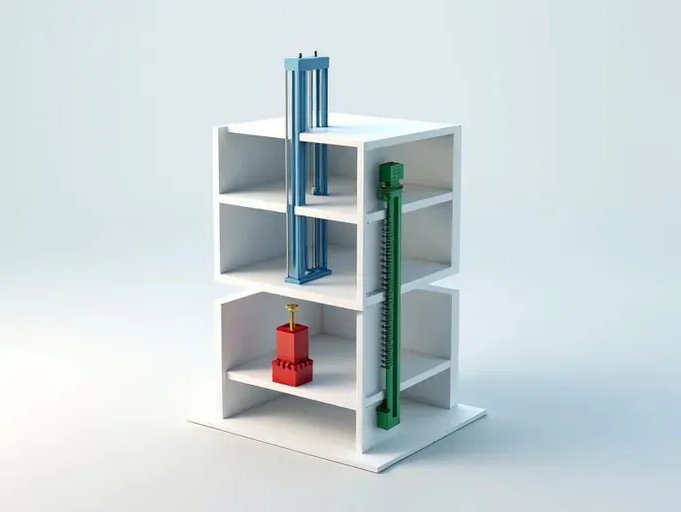
As society ages and living standards improve, demand for residential elevators continues to grow. These elevators not only facilitate mobility for seniors and individuals with disabilities but also enhance overall living quality by adding comfort and convenience. However, navigating the diverse home elevator market requires careful consideration of drive systems, as different mechanisms significantly impact performance, safety, space requirements, and maintenance costs.
This analysis examines three primary home elevator drive systems—traction, hydraulic, and screw-driven—comparing their technical principles, advantages, limitations, and ideal applications to help homeowners make informed decisions about vertical transportation solutions.
When selecting a home elevator, beyond aesthetic considerations like appearance and control systems, the choice of drive mechanism proves most critical. The three main systems—traction, hydraulic, and screw-driven—each employ distinct operating principles with unique benefits and drawbacks suited to different residential contexts.
Home elevator selection involves more than purchasing equipment; it represents a multidisciplinary project intersecting architecture, electrical engineering, and mechanical design. Each drive system embodies different technical philosophies with corresponding operational experiences and maintenance requirements, necessitating thorough evaluation before decision-making.
Traction elevators represent mature technology widely used in commercial buildings and high-rise residences. These systems employ steel ropes or belts connecting the cab to a counterweight, with an electric motor driving a sheave that moves the cab through friction. This configuration resembles a box suspended from a pulley system, where the counterweight balances cab weight to reduce motor load.
While traction elevators offer efficient, high-speed operation suitable for multi-story homes, their complex structure demands substantial shaft space, separate machine rooms, and higher maintenance—factors that may limit suitability for space-constrained or budget-conscious households.
Key components include:
Cab:Passenger or cargo compartment
Counterweight:Balancing mass matching cab weight
Sheave:Motor-driven wheel guiding ropes/belts
Steel ropes/belts:Flexible connectors transmitting motion
Motor:Power source for sheave rotation
Control system:Manages movement and floor selection
Safety devices:Overspeed governors, brakes, buffers
High speed:Faster operation reduces wait times for multi-story homes
Smooth ride:Precision mechanics enable vibration-free movement
Heavy capacity:Accommodates wheelchairs or strollers
Proven technology:Extensive safety validation through decades of use
Energy efficient:Modern designs minimize power consumption
Cost-effective (with infrastructure):Lower installation expense when shafts exist
High maintenance:Complex components require frequent servicing
Space intensive:Demands large shafts and machine rooms
Deep pit requirement:Needs 1.5-1.8m foundation pits vulnerable to water
Separate machine room:Adds installation complexity
Power dependency:Requires backup systems during outages
Best suited for:
Multi-story residences requiring rapid transit
Homes with pre-existing elevator shafts
Households prioritizing speed over space
Hydraulic systems use fluid pressure to move the cab, with an electric pump forcing oil into a cylinder to raise the platform, while controlled valve release enables gravity-powered descent. This simpler architecture offers lower installation costs, compact footprints, and heavy load capacity ideal for vehicles or large items.
However, potential fluid leaks, environmental concerns, and dedicated equipment space may deter safety-conscious or eco-friendly homeowners.
Key elements include:
Passenger cab
Hydraulic cylinder assembly
Fluid pump and reservoir
Control valves
Electric motor
Safety valves and emergency stops
Lower installation cost:Simpler structure reduces initial expense
Space efficient:Requires 10% less area than traction systems
Heavy load capacity:Suitable for vehicles or large items
Smooth operation:Fluid cushioning minimizes vibration
Safety features:Includes pressure relief valves
Leak potential:Fluid loss risks environmental damage and malfunction
Safety concerns:Flammable hydraulic fluid presents fire hazards
Dedicated space:Requires separate tanks and control boxes
Noise:Pump operation generates audible disturbance
Environmental impact:Fluid disposal requires special handling
Best suited for:
Low-rise homes prioritizing cost over speed
Residences requiring heavy load transport
Space-constrained installations
This emerging technology uses a vertically threaded screw shaft running the elevator's height, with a motor turning a nut that moves the cab along the spiral groove. The simple mechanical design offers high safety, low maintenance, and compact installation without pits or machine rooms.
However, slower speeds and weight limitations may deter households prioritizing rapid transit or heavy capacity.
Key components include:
Passenger cab
Vertical screw shaft
Rotating drive nut
Electric motor
Control system
Emergency brakes
Cost-effective:Simple construction lowers pricing
Ultra-safe:Mechanical locking prevents free-fall
Low maintenance:Biannual servicing suffices
Space-saving:No pit or machine room needed
Quick installation:Typically 7-10 days with minimal construction
Eco-friendly:No hydraulic fluids required
Reduced speed:0.15 m/s maximum affects high-rise usability
Weight limits:Lower capacity than alternatives
Height restrictions:Screw length limits travel distance
Basic aesthetics:Fewer design options available
Best suited for:
Low-rise residential installations
Space-constrained retrofits
Safety-focused households
Budget-conscious buyers
Traction:High-speed, high-capacity option requiring substantial space and maintenance
Hydraulic:Cost-effective heavy-load solution with environmental considerations
Screw-driven:Compact, low-maintenance choice with speed/load tradeoffs
Emerging technologies promise smarter, greener, and more customizable home elevator solutions:
Smart integration:App/voice controls and predictive maintenance
Sustainability:Energy-efficient motors and recyclable materials
Personalization:Tailored designs matching home aesthetics
Key installation factors include:
Structural compatibility assessments
Necessary construction modifications
Professional installer qualifications
Post-installation safety inspections
All home elevator types require regular:
Component cleaning and lubrication
Mechanical inspections
System adjustments
Wear-part replacements
Professional maintenance contracts help ensure long-term reliability across all drive systems.
latest company news
Mail Us



-
About
-
Screw Driven Elevator
-
Small Residential Elevator
-
Follow Us
Binhe Industrial Park, Huihe Street, Jiyang District, Jinan, Shandong, China
+8618654341166
ystelevator@yeah.net
-
Mail Us
China Good Quality Screw Driven Elevator Supplier. © 2025 - 2026 Shandong YST Elevator Co., Ltd.. All Rights Reserved.
